
You’ll achieve certification compliance by first conducting a thorough security assessment to identify gaps against required standards like CMMC’s five maturity levels. Next, you’ll systematically implement necessary security controls and maintain detailed documentation of all policies and procedures. Then you’ll prepare for third-party validation by gathering compliance documentation and conducting internal audits. Finally, you’ll establish continuous monitoring processes with automated tools and regular training sessions. This extensive guide reveals the complete roadmap.
Key Takeaways
- Conduct comprehensive security assessment and gap analysis to evaluate current cybersecurity posture against required standards.
- Systematically implement specific security controls and maintain detailed documentation for target maturity level compliance.
- Schedule regular internal audits to identify control weaknesses and ensure ongoing adherence to standards.
- Engage certified third-party assessors early and gather necessary documentation for external validation processes.
- Establish continuous monitoring systems and dedicated compliance teams to maintain certification over time.
Understanding CMMC Requirements and Maturity Levels
As the Department of Defense strengthens its cybersecurity posture across the defense supply chain, you’ll need to understand that the Cybersecurity Maturity Model Certification (CMMC) establishes five distinct maturity levels that determine your organization’s eligibility for federal contracts.
Each CMMC level requires progressively advanced cybersecurity practices, starting with basic cyber hygiene at Level 1 and escalating to sophisticated security controls at Level 5.
Your certification level depends on the type of Controlled Unclassified Information you handle. The CMMC framework integrates NIST SP 800-171 standards while streamlining the audit process for DoD contractors.
Compliance isn’t a one-time achievement—regulatory requirements emphasize continuous improvement. You must stay informed about evolving CMMC updates to maintain certification and guarantee your organization meets the maturity levels necessary for contract eligibility.
Conducting a Comprehensive Security Assessment and Gap Analysis
Before implementing any security controls for CMMC compliance, you must conduct a thorough security assessment that evaluates your organization’s current cybersecurity posture against the required maturity level standards.
This extensive evaluation should align with trust service criteria, examining security, availability, processing integrity, confidentiality, and privacy aspects of your data protection framework.
Performing a detailed gap analysis helps identify discrepancies between existing practices and regulatory compliance requirements, enabling you to develop targeted corrective actions.
A comprehensive gap analysis reveals critical security vulnerabilities and drives strategic remediation efforts for regulatory alignment.
Schedule regular internal audits to uncover control weaknesses before external certification process reviews.
Leverage automation tools to streamline data collection and enhance reporting accuracy.
Consider engaging AICPA-accredited professionals who can provide expert insights and recommendations, greatly improving your organization’s readiness for successful certification audits.
Implementing Required Security Controls and Documentation
Once you’ve identified gaps through your thorough assessment, you’ll need to systematically implement the specific security controls required for your target maturity level.
Focus on SOC 2’s Trust Service Criteria—Security, Availability, Processing Integrity, Confidentiality, and Privacy—to guarantee extensive protection. Documentation is critical throughout this process; you must maintain detailed records of all policies, procedures, and control activities to demonstrate compliance during audits.
Implementing required security controls involves engaging with AICPA-accredited CPA firms for expert guidance.
Compliance requires you to conduct internal audits regularly, evaluating control effectiveness and helping identify gaps before formal certification. Certification helps establish credibility, while automation tools streamline documentation and monitoring processes.
This systematic approach guarantees ongoing compliance and positions your organization for successful audit outcomes.
Preparing for Third-Party Assessment and Validation
After implementing your security controls and documentation processes, you’ll need to prepare meticulously for the third-party assessment that validates your compliance efforts.
Start by gathering all necessary documentation, including internal assessments, compliance policies, and quality control procedures. Conduct a thorough internal audit to identify non-conformities and gaps identified in your current systems.
Engage early with a certified certification body to clarify expectations and assessment criteria. Address any compliance issues through immediate corrective actions, demonstrating your commitment to meeting required standards.
Maintain clear communication with all stakeholders throughout this preparation phase, ensuring everyone understands their roles and responsibilities. This systematic approach will position your organization for successful validation and certification achievement.
Maintaining Continuous Compliance and Monitoring
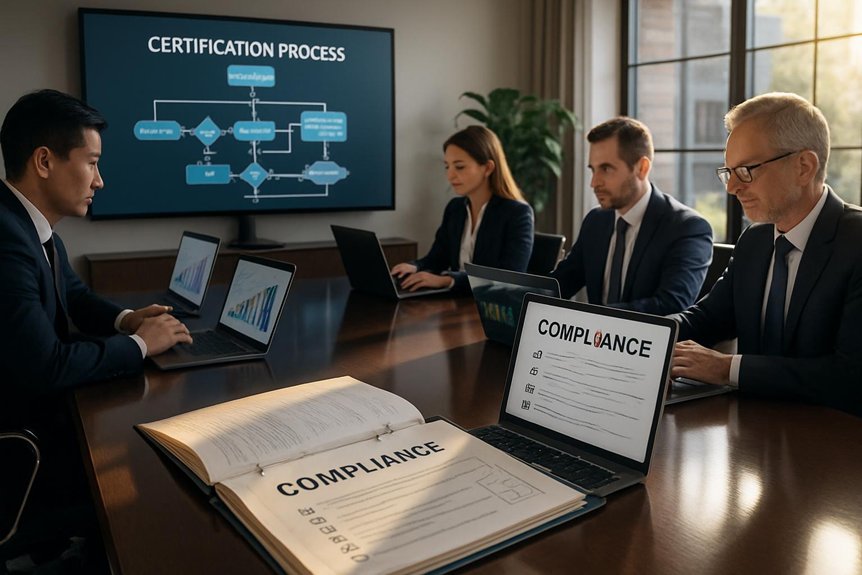
Achieving certification marks just the beginning of your compliance journey, as maintaining that status requires ongoing vigilance and systematic monitoring.
You’ll need to conduct regular internal audits to assess adherence to established standards and identify areas for improvements. Implementing automated compliance monitoring tools reduces manual oversight burden while enhancing accuracy in tracking your regulatory status.
Regular internal audits paired with automated monitoring tools create a robust foundation for maintaining compliance accuracy and reducing manual oversight burdens.
Schedule periodic training sessions to keep employees informed about compliance policies and procedures, fostering accountability throughout your organization.
Maintain up-to-date documentation of all compliance-related activities to demonstrate adherence during future audits and address any non-compliance issues promptly.
Consider establishing a dedicated compliance team or officer to lead monitoring efforts and respond quickly to challenges.
This proactive approach guarantees sustained certification status and continuous alignment with evolving standards.
Frequently Asked Questions
How to Do a Certificate of Compliance?
You’ll need to identify industry regulations and certification requirements for your Certificate importance.
Start by conducting a thorough risk assessment, then develop documentation standards meeting compliance benefits.
Create extensive training programs for staff and establish audit frequency schedules.
Address compliance challenges through systematic preparation of your submission package.
Select an accredited certification body, submit complete documentation electronically, and demonstrate adherence during inspections.
Implement continuous improvement processes to maintain ongoing compliance successfully.
What Are the 4 Methods of Compliance?
You’ll implement four key compliance strategies to meet organizational requirements.
First, adhere to regulatory frameworks mandated by governing bodies.
Second, establish internal documentation practices and training programs that support risk assessment and compliance monitoring.
Third, align with industry standards and best practices for continuous improvement.
Fourth, pursue third-party certifications through audit preparation and stakeholder engagement.
These methods guarantee you’re systematically addressing compliance while building credibility and maintaining accountability.
How Do You Conduct a Compliance Audit Step by Step?
You’ll conduct a compliance audit by first developing an audit checklist based on regulatory requirements and compliance standards.
Next, you’ll perform a risk assessment of internal controls and gather audit documentation.
Guarantee stakeholder involvement throughout the process while reviewing compliance training records.
After identifying gaps, you’ll implement corrective actions and establish appropriate audit frequency.
Document everything systematically, interview key personnel, and create actionable recommendations for improving your organization’s compliance framework.
What Are the Steps in Compliance?
Crafting detailed compliance starts with creating your compliance checklist and conducting thorough risk assessment.
You’ll establish internal controls, develop training programs, and build a strong compliance culture.
Document everything meticulously, guaranteeing proper audit trails and documentation practices.
Engage stakeholders throughout the process while meeting all regulatory requirements.
Finally, you’ll implement continuous improvement measures to maintain standards.
This systematic approach guarantees you’re consistently compliant and prepared for any regulatory scrutiny.
Conclusion
You’ve now built your CMMC compliance framework like constructing a fortress—each security control strengthens your defenses against cyber threats. Don’t let your guard down after certification; you’ll need continuous monitoring and regular assessments to maintain your compliance status. Remember, CMMC isn’t a one-time achievement but an ongoing commitment to protecting sensitive information. Stay vigilant, keep your documentation current, and you’ll successfully navigate future assessments while safeguarding your organization’s valuable data.