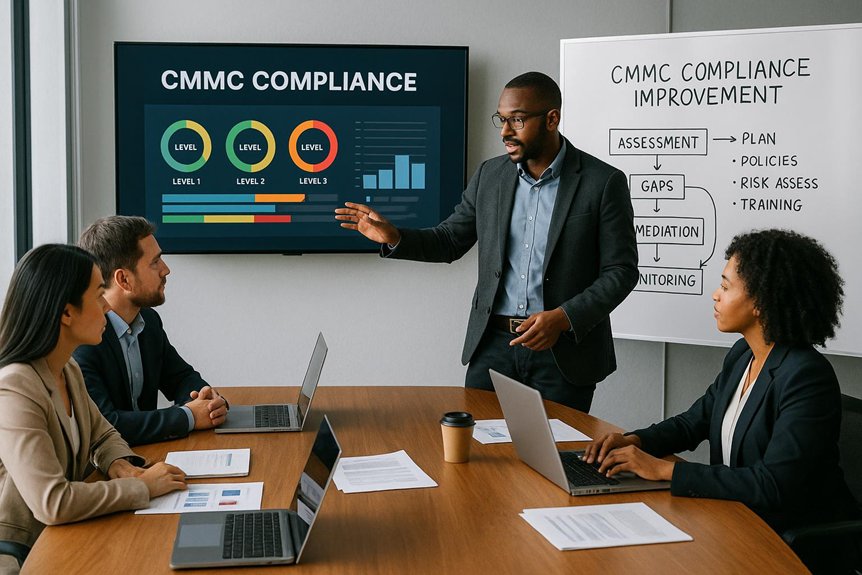
After CMMC audit findings reveal vendor compliance gaps, you’ll need to immediately develop corrective action plans with specific timelines and assigned responsibilities. Document each gap thoroughly, strengthen contract requirements with explicit cybersecurity clauses, and implement enhanced vendor assessment processes including mandatory compliance training. Establish continuous monitoring systems for real-time supply chain visibility and create centralized documentation repositories for all vendor agreements. These systematic remediation steps will help you maintain certification while transforming compliance into enforceable obligations.
Key Takeaways
- Create detailed corrective action plans with specific timelines, assigned responsibilities, and regular progress reviews to address identified compliance gaps.
- Implement enhanced vendor assessment processes including CMMC compliance checklists, mandatory training, and automated monitoring tools for continuous oversight.
- Strengthen contractual agreements by incorporating explicit cybersecurity clauses, performance metrics, audit requirements, and penalties for non-compliance.
- Establish centralized documentation systems to streamline evidence collection, reduce audit preparation errors, and maintain six-year record retention requirements.
- Deploy continuous monitoring systems with automated compliance tracking, regular vendor assessments, and real-time visibility into supply chain security posture.
Understanding Common CMMC Audit Findings in Vendor Management
When CMMC auditors examine vendor management practices, they consistently uncover critical gaps that can derail your organization’s compliance efforts.
The most frequent audit findings reveal inadequate documentation of vendor compliance processes, leaving you without clear records of security requirements and evaluations for third-party vendors. Your supply chain becomes vulnerable when vendors lack awareness of cybersecurity requirements, creating compliance gaps that threaten your contractor compliance status.
Auditors discover inconsistent security standards among your vendors, exposing weaknesses that compromise overall CMMC compliance. Without formal contracts specifying cybersecurity requirements, your third-party vendors operate without clear expectations, resulting in non-compliance issues.
Inconsistent vendor security standards create compliance vulnerabilities that directly threaten your organization’s CMMC certification status.
These vendor management deficiencies directly impact your ability to meet security standards and maintain CMMC certification.
Developing Corrective Action Plans for Third-Party Compliance Gaps
Once you’ve identified vendor management deficiencies through your CMMC audit, you must develop a detailed corrective action plan that transforms these findings into actionable remediation steps.
Your plan should clearly document each compliance gap with specific timelines and assign responsible parties for accountability. Each corrective action must directly align with CMMC requirements to guarantee targeted improvements address audit deficiencies.
Schedule regular progress reviews to monitor implementation and make necessary adjustments based on feedback. This ongoing oversight maintains momentum and guarantees third-party compliance improvements stay on track.
Document the entire remediation process, including evidence of corrective measures and vendor communications. This extensive documentation demonstrates transparency and provides essential evidence for future CMMC audits, proving your organization’s commitment to maintaining robust vendor compliance standards.
Implementing Enhanced Vendor Assessment and Onboarding Processes

A robust vendor assessment and onboarding process forms the foundation of effective CMMC compliance management, requiring you to evaluate potential partners before they access your systems or data.
You’ll need a thorough vendor assessment checklist that includes CMMC compliance requirements, ensuring all prospects meet security standards upfront. Your onboarding process should include mandatory training on compliance expectations and best practices, helping vendors understand their cybersecurity responsibilities within third-party relationships.
Implement automated tools for continuous monitoring to gain real-time insights into vendor compliance status. Schedule regular audits and assessments to verify ongoing adherence to CMMC standards.
Develop clear contractual agreements that explicitly outline compliance expectations and security obligations. This structured approach establishes accountability while strengthening your overall security posture through enhanced vendor oversight and management.
Establishing Continuous Monitoring for Supply Chain Security
Since vendor compliance status can change rapidly due to evolving threats and operational shifts, you’ll need continuous monitoring systems that provide real-time visibility into your supply chain security posture.
Implement automated tracking of CMMC compliance metrics to identify non-compliance issues quickly and enable immediate remediation actions.
Establish regular assessments and audits of vendor compliance, reviewing documentation and security controls for handling Controlled Unclassified Information (CUI).
Create a centralized documentation repository for vendor agreements and compliance records to streamline evidence collection during audits and guarantee stakeholder access to critical information.
Collaborate with vendors to develop thorough incident response plans that align with CMMC guidelines.
This guarantees all parties maintain proper cybersecurity posture and can address security incidents effectively throughout your supply chain.
Strengthening Contract Requirements and Service Level Agreements
While continuous monitoring provides visibility into vendor compliance, you’ll need robust contractual frameworks to enforce CMMC standards throughout your supply chain.
Strengthening contract requirements starts with incorporating explicit cybersecurity compliance clauses that eliminate ambiguity about vendor security expectations. Your service level agreements should include specific performance metrics for CMMC compliance, such as assessment completion timelines and incident response requirements.
You must mandate regular audits of third-party vendors within contracts to guarantee ongoing adherence to cybersecurity practices.
Establish clear penalties and remediation timelines for non-compliance to motivate vendors to maintain their certification status. These contractual measures create accountability mechanisms that transform CMMC compliance from optional guidance into enforceable obligations, ensuring your supply chain consistently meets required security standards.
Creating Vendor Training Programs for CMMC Requirements
Beyond contractual enforcement, educating your vendors about CMMC requirements through structured training programs guarantees they’ll understand and implement necessary security controls effectively.
You should develop tailored content addressing specific compliance gaps identified in audit findings, focusing on FCI handling and CUI handling responsibilities. Cover relevant CMMC levels with practical applications vendors must implement.
Schedule regular training updates reflecting requirement changes and lessons learned from previous audits, promoting continuous improvement.
Implement assessment tools like quizzes or demonstrations to measure vendor understanding and real-world application abilities. Establish a feedback mechanism allowing vendors to share compliance experiences and challenges.
This approach refines your vendor training programs while enhancing overall readiness for future CMMC audits through thorough education and ongoing support.
Building Incident Response Procedures for Third-Party Breaches

When third-party vendors experience security breaches involving your controlled unclassified information (CUI), you’ll need established incident response procedures that clearly define roles and responsibilities for both organizations.
These protocols guarantee coordinated responses that maintain compliance while protecting sensitive data.
Your incident response strategy should include:
- Centralized Documentation System – Maintain detailed protocols specifying notification requirements, escalation procedures, and step-by-step actions for third-party breaches affecting CUI.
- Regular Testing and Updates – Continuously test incident response plans with scenarios involving third-party breaches, guaranteeing all stakeholders understand communication processes and their specific roles.
- Proactive Monitoring and Training – Implement continuous monitoring to identify vulnerabilities in vendor systems while conducting regular training sessions emphasizing swift reporting and risk mitigation actions.
Maintaining Documentation and Evidence for Ongoing Compliance
As your organization builds robust incident response procedures, you must establish thorough documentation systems that prove ongoing CMMC compliance and prepare you for future audits.
Centralize all compliance documentation to streamline evidence collection and reduce human error during audit preparation. Your policies and procedures, including access control and incident response plans, need regular updates to reflect current practices and meet CMMC standards.
Centralized documentation systems eliminate audit preparation errors while ensuring policies remain current with evolving CMMC compliance standards.
Maintain extensive records of security controls, assessments, and self-assessments for six years from your CMMC Status Date.
Evidence retention includes corrective actions and continuous monitoring activities that demonstrate your security posture improvements.
Regularly review documentation based on ongoing compliance assessments to adapt to evolving CMMC requirements and strengthen your overall security framework.
Frequently Asked Questions
How Long Does It Typically Take to Achieve CMMC Compliance After Audit Findings?
You’ll typically need 3-6 months to achieve CMMC compliance after audit findings, depending on gap severity.
Your CMMC compliance timeline depends on effective remediation strategies and vendor collaboration.
You’ll need thorough audit preparation, thorough risk assessment, and updated compliance documentation.
Implement focused training programs with strong stakeholder engagement throughout the process.
You’ll benefit from consistent progress tracking and continuous improvement practices.
Success requires dedicated resources, clear communication, and a systematic approach to address all identified deficiencies promptly.
What Are the Costs Associated With Remediating Third-Party CMMC Compliance Gaps?
You’ll face varied costs when remediating third-party CMMC gaps.
Cost analysis reveals expenses for vendor assessments, compliance training, and technology upgrades ranging from thousands to hundreds of thousands.
Budget allocation should cover policy enforcement tools, risk management systems, and resource planning.
Remediation strategies include staff training, system implementations, and ongoing audit preparation.
Your total investment depends on gap severity, vendor count, and chosen solutions—but it’s essential for maintaining CMMC certification.
Can Organizations Lose Their CMMC Certification Due to Vendor Non-Compliance Issues?
You might think you’re safe once certified, but vendor non-compliance can absolutely jeopardize your CMMC certification validity.
Audit repercussions from vendor risks create serious compliance penalties that threaten your status. You’ll face contractual obligations requiring robust vendor oversight and mitigation plans.
Your compliance strategy must include thorough supply chain risk management, or you’ll risk losing certification.
Don’t let third-party failures derail your CMMC standing—proactive vendor monitoring is essential.
How Often Should Vendor CMMC Compliance Assessments Be Conducted Post-Audit?
You should conduct vendor CMMC compliance assessments annually at minimum, though compliance frequency depends on your risk management strategy and audit cycles.
Implement continuous monitoring for high-risk vendors while establishing compliance schedules based on assessment methodologies and vendor engagement levels.
Critical suppliers need quarterly reviews, while lower-risk partners can follow standard annual assessment cycles.
Always align remediation timelines with compliance best practices to maintain certification status effectively.
What Happens if a Critical Vendor Refuses to Meet CMMC Requirements?
A stubborn vendor’s refusal can absolutely devastate your entire compliance program.
You’ll need thorough vendor engagement strategies and compliance negotiation tactics first. If unsuccessful, implement escalation procedures outlined in your contract enforcement measures.
Consider alternative vendor solutions while your risk management frameworks assess regulatory implications discussed. Effective communication best practices remain essential throughout.
Contingency planning importance can’t be overstated—activate vendor accountability mechanisms immediately to protect your organization’s compliance status.
Conclusion
You’ve laid the groundwork for robust vendor compliance, but remember that Rome wasn’t built in a day. Your CMMC journey requires consistent effort across assessment, monitoring, and documentation processes. Don’t let perfectionism paralyze progress—start with high-risk vendors and expand systematically. You’ll strengthen your supply chain security posture while building sustainable compliance practices. Stay vigilant, adapt to evolving requirements, and maintain open communication channels with your third-party partners throughout this ongoing process.