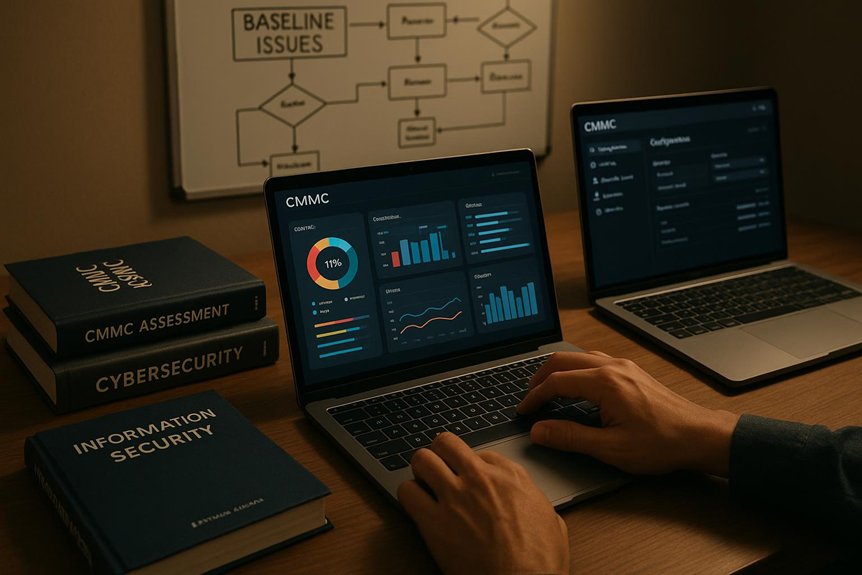
You’ll correct CMMC configuration management issues by establishing documented baseline configurations using security benchmarks like STIGs and CIS guidelines. Implement a formal Change Approval Board to review all modifications through Security Impact Analysis before deployment. Address gaps by conducting regular audits, enforcing hardening guides, and preventing unauthorized software installations. Use Configuration Management Databases and automated security tools to maintain consistent settings across your infrastructure. The following thorough approach will strengthen your compliance posture considerably.
Key Takeaways
- Document secure baseline configurations using established benchmarks like STIGs and CIS to create standardized security foundations.
- Implement continuous monitoring systems to detect and alert on deviations from approved baseline configurations immediately.
- Establish formal change management processes with approval boards and security impact analysis before implementing modifications.
- Deploy automated configuration management tools to enforce consistent security settings and prevent unauthorized system changes.
- Conduct regular audits and vulnerability assessments to identify configuration gaps and remediate compliance issues proactively.
Understanding CMMC Configuration Management Requirements
Nine specific configuration management controls form the backbone of CMMC 2.0 compliance, requiring your organization to establish rigorous processes for securing Controlled Unclassified Information (CUI) while meeting NIST SP 800-171 standards.
These CMMC requirements demand you implement baseline configurations that serve as security foundations for your systems. You must enforce security settings consistently across your infrastructure while controlling unauthorized software installations that could introduce vulnerabilities.
CMMC compliance requires establishing robust baseline configurations as security foundations while maintaining strict control over software installations across your infrastructure.
Your configuration management processes need thorough logging changes to track all system modifications. A Change Control Board must review and approve alterations before implementation.
You’re required to conduct security impact analysis for each proposed change, evaluating potential risks to your secure configurations. This systematic approach guarantees compliance while maintaining the integrity of your security posture throughout organizational operations.
Establishing Baseline Configurations for CUI Systems
When establishing baseline configurations for your CUI systems, you’ll create detailed documentation that captures secure settings across operating systems, approved software installations, and disabled unnecessary features.
This documentation guarantees consistent security posture across your environment while supporting compliance with CMMC requirements.
You should leverage established security benchmarks like STIGs and CIS Benchmarks to guide your baseline development.
These frameworks provide proven templates for securing your specific system configurations.
Regular updates to these baselines address emerging vulnerabilities and maintain effectiveness against evolving threats.
Implement continuous monitoring to detect deviations from your established baselines.
Any configuration changes must flow through a formal change management process that includes validation and testing.
This approach prevents unauthorized modifications that could compromise your CUI systems’ security and guarantees ongoing compliance.
Implementing Change Management Processes
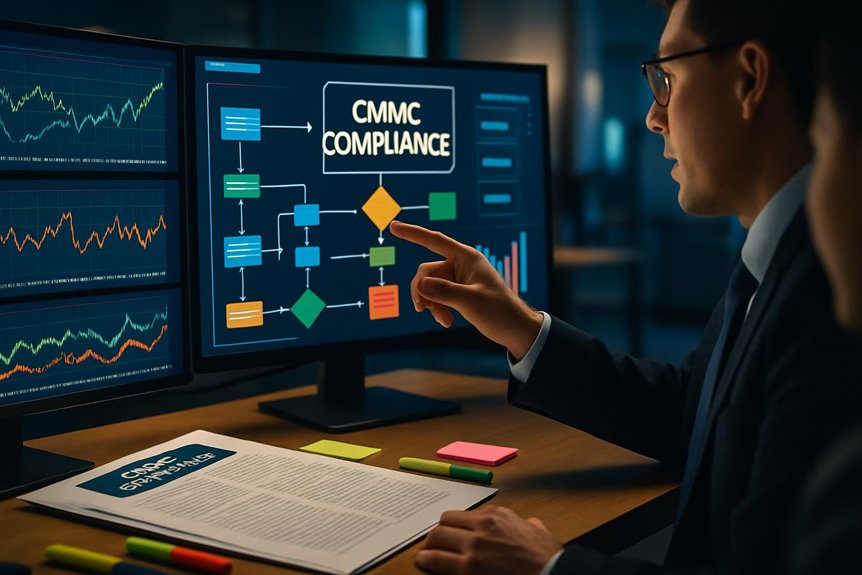
Since configuration changes pose significant security risks to CUI systems, you’ll need a robust change management process that controls how modifications are evaluated, approved, and implemented.
Start by establishing a Change Approval Board that includes system owners and security personnel to review all proposed changes against your baseline configurations.
Implement a structured workflow requiring Security Impact Analysis before any modifications. This risk assessment guarantees you understand potential vulnerabilities before deployment.
Test all changes in controlled environments first, then maintain a centralized change log documenting approval status and outcomes.
Your documentation must include thorough records with version control for compliance verification.
This change management approach integrates seamlessly with your configuration management framework, providing the audit trail necessary for CMMC compliance while protecting CUI system integrity.
Addressing Common Configuration Management Gaps
Despite having change management processes in place, organizations frequently encounter configuration management gaps that can compromise CMMC compliance and system security.
You’ll often find inadequate baseline configurations that lack proper documentation, creating vulnerabilities and compliance issues. Tracking changes becomes problematic when modifications go undocumented, hindering audit efforts and creating security risks.
Your security configuration settings require consistent enforcement following hardening guides like STIGs to prevent unauthorized changes.
Without proper monitoring, unauthorized software installations increase your attack surface and complicate CMMC compliance efforts. These configuration management gaps can expose your systems to potential breaches.
You must conduct regular audits and vulnerability assessments to identify and remediate these gaps effectively.
This proactive approach guarantees your systems maintain proper configurations and meet evolving CMMC requirements consistently.
Tools and Technologies for Configuration Compliance
Although manual configuration management can address some compliance gaps, you’ll need specialized tools and technologies to achieve consistent CMMC configuration compliance at scale.
Configuration Management Databases like ServiceNow maintain extensive IT asset inventories for compliance tracking. Security Configuration Management tools such as Microsoft Group Policy and Ansible automate security settings enforcement across your systems, ensuring consistent baseline configurations.
Vulnerability scanners including Nessus and Qualys identify configuration weaknesses and verify adherence to security standards. Privileged Access Management solutions like CyberArk enforce access controls, preventing unauthorized software installations and configuration changes.
Endpoint Detection and Response tools such as Microsoft Defender detect security incidents related to configuration modifications.
These automated tools work together to maintain continuous compliance, providing real-time monitoring and rapid response capabilities essential for CMMC requirements.
Maintaining Ongoing Configuration Management Excellence
Implementing the right tools provides the foundation for CMMC compliance, but sustaining that compliance requires a systematic approach to ongoing configuration management excellence.
You’ll need to continuously audit and update baseline configurations to address vulnerabilities and emerging threats effectively. Deploy automated tools for compliance checking that generate alerts when security configurations deviate from established standards.
Regular evaluations against benchmarks like STIGs and CIS standards help maintain alignment with best practices.
You must establish a robust Change Management Process to document, track, and approve all modifications, ensuring changes don’t introduce security risks. Continuous monitoring and documenting configuration changes are essential for demonstrating CMMC compliance while maintaining your secure IT environment throughout the certification lifecycle.
Frequently Asked Questions
What Are the Consequences of Poor Configuration Management?
Poor configuration management creates serious problems you’ll face across your IT environment.
You’ll experience configuration drift leading to security vulnerabilities and operational inefficiencies. Compliance failures become inevitable, while system outages and data breaches threaten your business continuity.
You’ll waste resources constantly fixing problems, deal with audit complications, and frustrate users with unreliable systems.
Most critically, you’re increasing your organization’s risk exposure to cyber threats and regulatory penalties.
What Are the 5 Principles of Configuration Management?
While chaos disrupts systems, you’ll find order through configuration management’s five core principles.
First, you’ll establish baseline configurations as your foundation.
Second, you’ll implement version control to track all changes through detailed audit trails.
Third, you’ll enforce security settings aligned with compliance standards.
Fourth, you’ll manage structured change control processes with thorough risk assessment.
Finally, you’ll control software updates and application execution, ensuring your infrastructure management maintains security while managing configuration items effectively.
What Is a Baseline in Configuration Management?
A baseline in configuration management is your documented reference point capturing your system’s approved state, including software versions, settings, and hardware specifications.
You’ll create baselines by inventorying all components and documenting their secure configurations.
You must maintain these through regular reviews and updates, comparing current states against established standards.
Baseline documentation enables you to detect deviations, guarantee compliance, and restore systems to known-good configurations when security issues arise.
What Is the Concept of Baselines in Security Configuration Management?
While ad-hoc configurations create chaos, you’ll find that structured baseline security brings order to your systems.
You establish baseline importance through documented standards that define your security posture. Through baseline establishment, you’re creating reference points for baseline comparison against current configurations.
Regular baseline maintenance guarantees you’re conducting proper baseline review and implementing necessary baseline updates.
This systematic approach to baseline documentation assures baseline compliance with security frameworks, strengthening your overall defensive capabilities.
Conclusion
You’ve mastered the fundamentals of CMMC configuration management, from establishing baselines to implementing robust change controls. Consider how XYZ Manufacturing transformed their compliance posture by deploying automated configuration scanning tools across their CUI environment. They reduced configuration drift incidents by 85% within six months while maintaining CMMC Level 2 certification. You’re now equipped to tackle similar challenges, ensuring your organization’s configuration management practices protect controlled information effectively.