You’ll master CMMC Level 1 certification by focusing on three key strategies: First, create a structured study plan that covers all 17 required cybersecurity practices with daily time blocks and regular practice assessments. Second, gain hands-on experience by actually implementing security controls like firewalls and incident response procedures in real environments. Third, maintain thorough documentation of all your configurations, audits, and training protocols as proof of compliance. These practical approaches will accelerate your certification timeline and deepen your understanding of the concepts you’ll encounter.
Key Takeaways
- Create a structured daily study schedule spanning several weeks with dedicated time blocks for curriculum review and practice assessments.
- Implement hands-on security controls including firewall configuration, intrusion detection systems, and documented incident response procedures for practical experience.
- Focus on mastering the 17 specific cybersecurity practices required for CMMC Level 1, emphasizing access control and authentication fundamentals.
- Develop comprehensive documentation strategies to demonstrate compliance readiness and maintain detailed records of all security configurations and procedures.
- Achieve consistent high scores of 95%-100% on practice exams from reputable sources to build confidence before the actual certification.
Understanding CMMC Level 1 Requirements and Assessment Scope
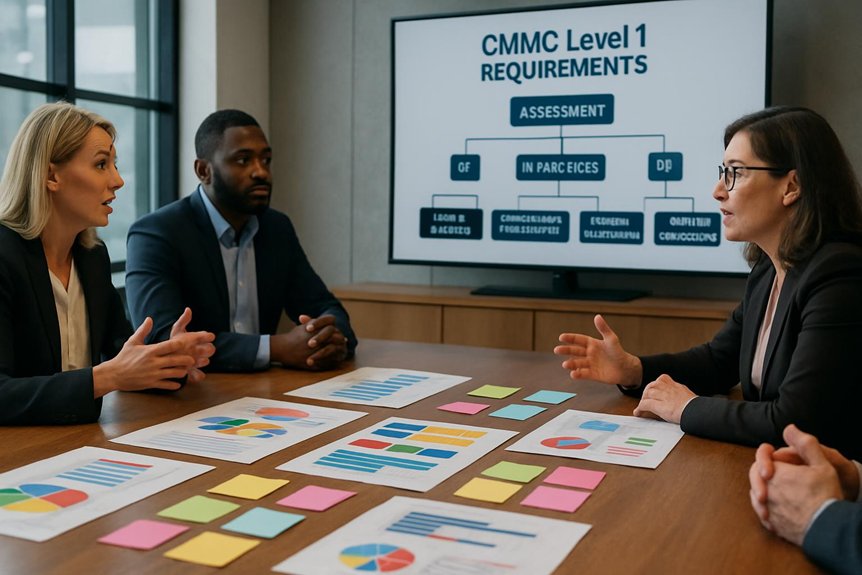
Before you can develop an effective compliance strategy, you must understand that CMMC Level 1 requires your organization to implement 17 specific cybersecurity practices designed to protect Federal Contract Information (FCI).
These practices focus on basic cyber hygiene fundamentals that establish essential security controls. Your assessment scope encompasses critical areas including access control, identification and authentication, and incident response capabilities.
CMMC Level 1 establishes fundamental security controls across access management, authentication protocols, and incident response frameworks for comprehensive organizational protection.
You’ll need to demonstrate how these practices integrate throughout your information systems and processes. Depending on your contract requirements, you’ll complete either self-assessments or undergo third-party evaluations to verify compliance.
Federal agencies now mandate this certification as a prerequisite for DoD contracts, making thorough preparation essential. Understanding these foundational requirements enables you to allocate resources effectively and develop detailed implementation strategies.
Developing a Comprehensive Study Plan With Practice Assessments
Creating a structured study plan serves as your roadmap to CMMC Level 1 certification success, transforming what might seem overwhelming into manageable daily objectives.
Establish a daily study schedule dedicating specific time blocks for reviewing key concepts from the curriculum over several weeks before your exam. Incorporate practice assessments regularly to pinpoint knowledge gaps and gauge your readiness using platforms like scrum.org’s open assessments.
Utilize mock exams from reputable sources to simulate the actual testing environment, targeting scores of 95%-100% to build confidence.
Focus on summarizing concepts and applying them to real-world scenarios for enhanced retention. Track your progress using an extensive coverage checklist of skills and concepts, adjusting your study plan as needed to guarantee you’re fully prepared for test day.
Implementing Hands-On Security Controls and Documentation Strategies

While mastering the theoretical knowledge through your study plan builds the foundation, you’ll need to demonstrate practical proficiency by implementing actual security controls and maintaining proper documentation.
This hands-on experience bridges the gap between study materials and the actual exam requirements.
Focus your time on these essential documentation strategies:
- Configure firewalls and intrusion detection systems while logging every configuration change for validation purposes.
- Create detailed incident response procedures that document step-by-step protocols your team can follow.
- Establish regular audit schedules for periodic reviews of security controls and system configurations.
- Develop training staff protocols that emphasize proper documentation practices and security awareness.
Practice exams become more meaningful when you’ve actually implemented these controls, giving you real-world context for theoretical questions.
Frequently Asked Questions
What Is the Best Way to Prepare for CFA Level 1?
You’ll succeed by creating a structured study schedule that breaks down topics systematically.
Use effective resources like Kaplan Schweser and supplement with online courses for thorough coverage.
Join study groups to discuss complex concepts and maintain motivation.
Practice exams are essential – take them regularly to identify weak areas.
Develop strong revision techniques using flash cards for formulas.
Master time management through your exam strategy, focusing heavily on Ethics since it’s weighted considerably and offers straightforward points.
How to Prepare for Crossfit Level 1 Certification?
Think of CrossFit Level 1 prep as building a house—you need a solid foundation.
Start by mastering CrossFit fundamentals through the official training guide and online resources. Develop effective study techniques while practicing sample workouts to understand movement mechanics.
Focus on coaching philosophy and nutrition tips. Don’t fall for certification myths about easy shortcuts.
Utilize community support, create structured workout plans, and master exam strategies through practice tests and hands-on coaching experience.
Is It Difficult to Pass CFA Level 1?
You’ll find the CFA Level 1 challenging with its 40-45% pass rate, but it’s definitely passable with proper preparation.
The CFA exam structure requires understanding concepts across weighted topics rather than memorization. You’ll benefit from joining study groups, following time management tips, and using practice exam strategies.
Avoid common mistakes by focusing on revision techniques and stress management techniques. With 300-400 hours of study using quality resource recommendations, you can succeed.
How to Study for a Certification Test?
Studying for certification tests can feel like climbing Mount Everest!
You’ll want to create a structured approach using thorough study guides and practice exams. Form study groups for accountability, utilize flash cards for quick revision techniques, and leverage online resources extensively.
Master time management by scheduling regular mock tests and concept mapping sessions. Develop solid exam strategies through consistent practice.
Don’t forget to implement spaced repetition and active recall methods for maximum retention.
Conclusion
You’ve studied the requirements and mapped your assessment scope, yet theory won’t secure your certification alone. You’ve crafted practice tests and study schedules, but real-world implementation separates candidates from certified professionals. You’ve documented every control and tested each security measure, while others skip the hands-on experience. Now you’re equipped with theoretical knowledge and practical skills—the winning combination that transforms CMMC Level 1 aspirations into certified reality. Your thorough approach guarantees success.