
You’ll achieve CMMC certification success by first determining your required level and conducting a detailed gap analysis against NIST SP 800-171 standards. Assemble a cross-functional team including IT, compliance, and legal experts, then partner with an experienced MSP for specialized guidance. Schedule your C3PAO assessment early, develop thorough documentation, and implement robust employee training since 88% of breaches stem from human error. Establish long-term maintenance strategies and continuous monitoring to prepare for the three-year recertification cycle ahead.
Key Takeaways
- Conduct thorough gap analysis against NIST SP 800-171 requirements and create prioritized action plans addressing critical vulnerabilities.
- Partner with experienced MSPs specializing in CMMC compliance to develop customized Shared Responsibility Matrices and ongoing support.
- Schedule C3PAO assessments well in advance to allow adequate time for documentation preparation and gap remediation.
- Implement comprehensive employee training programs with interactive methods, as 88% of security breaches stem from human error.
- Establish dedicated compliance committees and automated monitoring tools to maintain certification throughout the three-year cycle.
Understand Your Required CMMC Level and Associated Controls
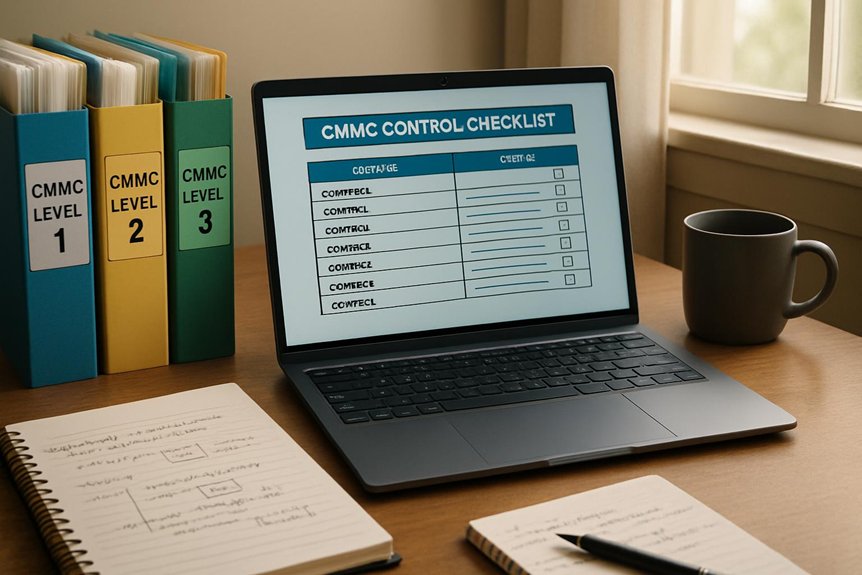
Where should you begin when preparing for a CMMC assessment?
You must first determine your required CMMC level based on the data you handle and your Department of Defense (DoD) contracts.
Organizations processing Federal Contract Information (FCI) need Level 1 compliance with 17 basic cybersecurity practices.
If you handle Controlled Unclassified Information (CUI), you’ll require Level 2 certification covering 110 controls.
Level 3 encompasses 130 extensive controls for the most sensitive information.
Conduct a Comprehensive Gap Analysis Before Assessment
Before diving into the formal assessment process, you must conduct a thorough gap analysis that compares your current cybersecurity practices against NIST SP 800-171 requirements and the CMMC framework. This analysis will identify gaps in your controls, policies, and procedures, helping you understand compliance requirements and prioritize areas for improvement.
Engage a cross-functional team to evaluate your entire cybersecurity posture extensively. Document specific deficiencies and create an action plan addressing critical vulnerabilities first. This proactive approach considerably reduces your risk of failing the assessment and facing penalties like contract loss or reputational damage.
Regularly conducting gap analyses maintains continuous alignment with evolving CMMC framework standards, ensuring you’re always prepared for assessments and maintaining ideal security practices.
Assemble a Cross-Functional CMMC Readiness Team

Once you’ve completed your gap analysis, you’ll need to assemble a cross-functional team that brings together diverse expertise from across your organization.
Your team should include members from IT, compliance, legal, and operations to address all cybersecurity measures and CMMC requirements effectively.
Here’s how to build an effective team:
- Define clear roles and responsibilities for each member to streamline communication and accountability.
- Schedule regular meetings to identify compliance gaps and share valuable insights among departments.
- Implement training and educating sessions on NIST SP 800-171 controls to align everyone with compliance goals.
Consider using a project management tool to track progress and document findings.
This structured approach guarantees your cross-functional team collaborates efficiently while maintaining focus on achieving thorough CMMC readiness.
Partner With an Experienced Managed Service Provider
While building an internal team is essential, partnering with an experienced Managed Service Provider (MSP) can greatly accelerate your CMMC preparation and reduce the burden on your resources.
Look for an MSP that demonstrates expertise in CMMC compliance and understands cybersecurity standards like NIST 800-171 and DFARS 7012. They’ll provide tailored support specific to your organization’s needs and deliver a customized Shared Responsibility Matrix that clearly defines who handles what compliance tasks.
This partnership enhances your security posture, making you more competitive for Department of Defense contracts.
Through continuous collaboration, you’ll stay current on evolving compliance requirements while maintaining a proactive approach to cybersecurity. The right MSP becomes an extension of your team, streamlining complex regulatory navigation.
Develop Complete Documentation and Policy Framework

Three critical components form the backbone of successful CMMC compliance: thorough documentation, clear policies, and detailed procedural frameworks. Your documentation serves as evidence of cybersecurity practices aligned with NIST SP 800-171, demonstrating how you’ve implemented necessary controls.
Focus on these essential documentation elements:
- Control Matrix Development – Create a detailed matrix outlining People, Processes, and Technology for each requirement, helping assessors understand your implementation methodology.
- CUI Data Flow Documentation – Map clear policies and procedures showing how Controlled Unclassified Information moves through your systems, with designated responsible personnel ensuring accountability.
- Regular Updates and Self-Assessment – Maintain current documentation through internal audits, as CMMC certification requires adherence to documented policies and procedures during assessments.
Over-communicating your security story through thorough documentation instills confidence in assessors.
Implement Continuous Monitoring and Internal Reviews
Successful CMMC compliance doesn’t end with initial implementation—it requires ongoing vigilance through continuous monitoring and regular internal reviews.
You’ll need to establish automated tools that track your cybersecurity controls in real-time, ensuring you maintain CMMC standards consistently. Schedule quarterly assessments to evaluate your security posture and identify areas needing improvement before formal evaluations occur.
Your compliance efforts should include proactive steps like implementing monitoring systems that detect vulnerabilities immediately. These tools enhance accuracy while reducing manual oversight burdens.
Don’t overlook your team’s role—engage all employees through regular training sessions that foster security awareness throughout your organization.
Schedule Your C3PAO Assessment Well in Advance

After establishing your monitoring systems and interval review processes, you’ll need to book your C3PAO assessment months ahead of your target compliance deadline.
Assessment scheduling has become increasingly competitive as organizations rush toward the 2025 compliance deadline, making advance planning essential for securing a timely spot.
Early booking provides three critical advantages:
- Documentation preparation time – You’ll have adequate time to gather required evidence and refine your cybersecurity practices based on self-assessment findings.
- Revision opportunities – Any gaps identified can be addressed before the official audit process begins.
- Stress reduction – Your team will feel more confident and prepared rather than scrambling last-minute.
C3PAOs have varying availability, so prompt scheduling prevents delays that could jeopardize your ability to bid on DoD contracts and maintain business continuity.
Prepare a Compelling Compliance Narrative for Assessors
While technical compliance forms the foundation of CMMC certification, your ability to clearly articulate your cybersecurity story can make the difference between a smooth assessment and unnecessary complications.
Develop a compelling compliance narrative that demonstrates your structured approach to NIST SP 800-171 control implementation. Create detailed documentation showcasing your documented policies, procedures, and assigned personnel responsibilities. This transparency helps assessors understand your compliance efforts quickly and thoroughly.
A well-crafted compliance narrative transforms complex NIST SP 800-171 implementations into clear, assessor-friendly documentation that accelerates certification success.
Utilize a control matrix mapping People, Processes, and Technology across your cybersecurity framework. This visual representation simplifies complex information for assessors while highlighting your systematic methodology.
Over-communicate throughout the assessment process. Your proactive approach to explaining control implementation demonstrates genuine commitment to cybersecurity excellence.
Train Employees on Cybersecurity Policies and Procedures

Transform your workforce into your strongest cybersecurity defense by implementing extensive training programs that address the human element of security.
Since 88% of security breaches stem from human error, thorough training on cybersecurity policies becomes essential for CMMC compliance success.
Effective employee training requires strategic implementation:
- Start strong during onboarding – Integrate security awareness into new hire orientation, establishing clear expectations and best practices from day one.
- Use engaging methods – Incorporate interactive quizzes, simulations, and real-world scenarios to improve retention and maintain employee interest in cybersecurity concepts.
- Maintain continuous assessment – Conduct regular refresher sessions and evaluate training effectiveness through feedback and performance metrics to guarantee employees can handle incident response situations.
Provide clear documentation of procedures so employees understand their compliance responsibilities and remain vigilant against evolving threats.
Establish Long-Term Compliance Maintenance Strategies
Since CMMC certification expires every three years, building sustainable compliance maintenance strategies becomes critical for protecting your long-term cybersecurity investment and avoiding costly re-certification delays.
Establish a dedicated compliance committee or officer to oversee ongoing compliance monitoring and accountability. Implement regular internal audits to identify gaps and guarantee policies align with evolving CMMC requirements.
Deploy automated compliance tools for real-time tracking of cybersecurity practices, streamlining your monitoring processes.
Develop continuous training programs reinforcing security best practices, as human error causes 88% of breaches. Schedule annual affirmations by senior officials confirming compliance status, as mandated by CMMC regulations.
These strategies create a robust risk management framework that maintains certification readiness while strengthening your overall security posture throughout the three-year cycle.
Frequently Asked Questions
How to Achieve CMMC Compliance?
To achieve CMMC compliance, you’ll need a thorough CMMC compliance checklist and CMMC training resources.
Start by establishing your CMMC assessment timeline and gathering CMMC documentation requirements.
Develop CMMC implementation strategies focusing on CMMC security controls and CMMC policy development.
Integrate CMMC risk management throughout your process while preparing for CMMC audit preparation.
Consider CMMC cost considerations early, as they’ll impact your budget and resource allocation for successful certification achievement.
How Much Does a CMMC Assessor Make?
You’re probably wondering if CMMC assessor roles offer financial rewards worth pursuing.
Here’s the reality: CMMC assessor salary ranges from $75,000 to $150,000+ annually, with freelancers earning $150-300 hourly. Your CMMC assessor qualifications and experience directly impact earnings.
With growing CMMC assessor demand approaching the 2025 deadline, CMMC certification bodies are expanding opportunities. Strong CMMC auditor requirements in cybersecurity and compliance make this lucrative.
CMMC training programs can boost your earning potential considerably.
Is CMMC Certification Hard?
CMMC certification challenges can be significant, but they’re manageable with proper preparation.
You’ll face complex documentation requirements and 130 controls at Level 3. Common pitfalls encountered include inadequate resource allocation and unrealistic certification timeline expectations.
However, effective certification preparation strategies, thorough training program effectiveness, and solid assessment stress management make success achievable.
The cost benefit analysis clearly shows long term benefits outweigh initial difficulties when you follow compliance roadmap essentials systematically.
How Long Does a CMMC Assessment Take?
Your CMMC assessment duration typically spans 2-5 days, depending on certification level and organizational complexity.
Assessment phases include documentation review, staff interviews, and security control verification. Your preparation timeline should account for weeks or months of pre-assessment work, including gap analyses and self-evaluations.
Assessment factors like company size, multiple locations, and compliance readiness affect your typical schedule.
Proper assessment logistics, organized resources, and clear assessment expectations will streamline the process and improve assessment outcomes.
Conclusion
You’ve got the roadmap to CMMC success, but remember—the devil’s in the details. Don’t cut corners when implementing these strategies. Your assessment outcome hinges on thorough preparation, from understanding requirements to maintaining long-term compliance. You’ll need dedicated teamwork, proper documentation, and ongoing employee training. Start early, stay organized, and you’ll navigate the assessment process confidently. Success isn’t just about passing—it’s about building a robust cybersecurity foundation that protects your organization’s future.