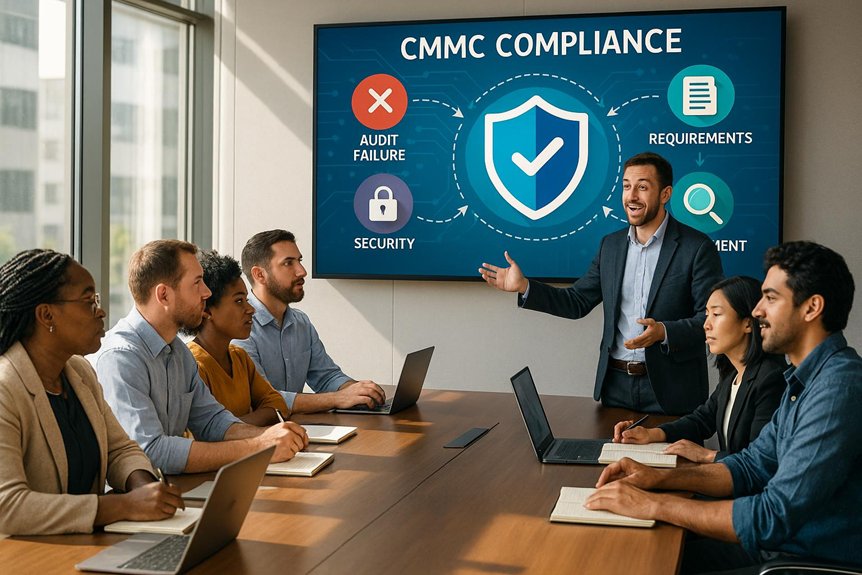
After a CMMC audit failure, you’ll need to rebuild your security culture through targeted training programs that address specific compliance gaps. Start by analyzing audit findings to identify critical vulnerabilities, then develop role-based training that assigns clear security responsibilities to compliance managers and IT teams. Implement continuous monitoring systems and regular assessments to track progress, while fostering accountability through structured workflows and leadership involvement. This all-encompassing approach below will transform your organization’s cybersecurity preparedness.
Key Takeaways
- Analyze audit failures to identify specific compliance gaps and develop targeted training programs addressing critical non-compliance areas.
- Establish clear role-based responsibilities with defined ownership for CMMC controls across compliance managers, IT teams, and staff.
- Implement continuous monitoring systems and regular training sessions to maintain real-time compliance tracking and updated cybersecurity practices.
- Create interactive training with real-case scenarios, simulations, and hands-on exercises to enhance staff understanding and response capabilities.
- Measure training effectiveness through compliance audit results, incident response times, and ongoing assessments to sustain compliance culture.
Understanding the Root Causes of CMMC Audit Failures

When organizations fail CMMC audits, the underlying causes typically stem from fundamental gaps in cybersecurity practices rather than complex technical failures.
You’ll find that poor credential management tops the list—shared accounts and weak passwords create immediate compliance vulnerabilities.
Your documentation practices likely need improvement too, as missing or outdated policies prevent auditors from verifying adherence to security requirements.
Missing or outdated documentation creates immediate audit vulnerabilities by preventing proper verification of your security compliance measures.
Insufficient continuous monitoring leaves you blind to emerging threats, while skipping regular risk assessment exposes your organization to preventable security gaps.
Perhaps most critically, you can’t achieve lasting CMMC compliance without leadership commitment and a robust culture of cybersecurity.
These audit failures highlight why training staff becomes essential—your team needs thorough understanding of these root causes to prevent future compliance breakdowns.
Developing Targeted Training Programs Based on Audit Findings
After identifying your audit failures, you’ll need to transform those findings into actionable training programs that address your organization’s specific compliance gaps.
Develop targeted training programs by analyzing critical non-compliance areas like credential management and incident response procedures. Incorporate real-case scenarios from your audit findings to enhance employee understanding of compliance requirements and failure consequences.
Implement regular assessments and feedback mechanisms to guarantee staff apply cybersecurity practices effectively in their roles. Emphasize proper documentation maintenance and log keeping, as inadequate records commonly cause audit failures.
Create interactive training sessions that foster accountability and transparency regarding CMMC compliance standards. This approach encourages employees to report incidents and maintain adherence to requirements, building a stronger compliance culture throughout your organization.
Creating Accountability Through Role-Based Security Responsibilities
Building effective training programs requires a foundation of clear ownership and accountability across your organization.
You’ll need to establish well-defined roles and responsibilities that eliminate confusion and enhance CMMC compliance execution. Assign specific security responsibilities to team members like Compliance Managers, IT & Security Teams, and Risk Managers to streamline compliance efforts and foster ownership.
Conduct regular training sessions that reinforce these role-based security responsibilities, ensuring everyone understands their contribution to maintaining compliance.
Implement structured workflows that delineate tasks associated with CMMC controls, preventing overlapping responsibilities while ensuring effective monitoring.
Leadership involvement is essential for establishing a culture of accountability.
Executive support drives commitment across all organizational levels, making your compliance efforts more sustainable and effective in preventing future audit failures.
Implementing Continuous Learning and Monitoring Systems
Since role-based accountability forms the foundation of effective compliance, you’ll need to establish continuous learning and monitoring systems that adapt to evolving CMMC requirements and emerging cybersecurity threats.
Schedule regular training sessions covering updated cybersecurity best practices and CMMC compliance standards to maintain staff readiness.
Deploy automated monitoring systems for real-time tracking of compliance progress, enabling proactive identification of compliance gaps before your next audit.
Strengthen your security posture by conducting simulations and hands-on exercises that test staff response to security incidents, ensuring your emergency response plans are effective and well-understood.
Create continuous improvement cycles by regularly updating training materials based on audit findings and emerging threats, fostering open communication where employees can report vulnerabilities without fear of reprisal.
Measuring Training Effectiveness and Sustaining Compliance Culture
While implementing continuous learning systems provides the foundation for compliance readiness, you must establish measurable benchmarks to evaluate whether your training programs actually improve staff performance and strengthen your organization’s CMMC adherence.
Focus on measuring training effectiveness through compliance audit results, incident response times, and employee retention rates of critical knowledge. Conduct simulations and tabletop exercises to assess staff understanding of cybersecurity practices and identify gaps requiring additional attention.
Sustaining compliance culture requires continuous engagement through ongoing learning opportunities like refresher courses and workshops.
Establish clear communication channels for reporting compliance-related issues, empowering employees to actively maintain CMMC compliance. These metrics and practices guarantee your training programs deliver tangible improvements in organizational preparedness while keeping cybersecurity practices at the forefront of employee awareness.
Frequently Asked Questions
Does CMMC Require an Audit?
Yes, CMMC requires mandatory third-party audits for your organization when handling CUI.
You can’t rely on self-attestation anymore under CMMC 2.0’s compliance requirements. Level 2+ certification demands formal assessment by C3PAOs who’ll evaluate your security measures against specific assessment criteria.
You’ll face regular audit frequency requirements and must meet certification timelines. The audit process examines your contractor responsibilities, and you’ll need remediation strategies plus compliance training to maintain certification successfully.
Is CMMC Going Away?
No, CMMC isn’t going away despite contractor concerns about regulatory changes.
The DoD’s updated CMMC 2.0 streamlines cybersecurity standards while maintaining compliance requirements for defense contractors.
Industry reactions show continued investment in the framework’s future. You’ll face audit implications regardless of updates, making training importance critical for risk management.
The December 2024 final rule confirms CMMC’s permanence, so you should prepare for ongoing compliance obligations rather than expecting elimination.
How to Achieve CMMC Compliance?
Ready to transform your organization’s cybersecurity posture?
You’ll achieve CMMC compliance by implementing extensive CMMC training programs that foster a strong compliance culture through active staff engagement.
Focus on thorough audit preparation with continuous education on security protocols and incident response procedures.
Strengthen your risk management approach through consistent policy enforcement and ongoing assessments.
You’ll build lasting compliance by engaging CMMC Registered Practitioners and conducting regular workshops that reinforce cybersecurity best practices organization-wide.
How Many CMMC Practices Must Be Met Successfully Implemented for a Dod Contractor to Affirm Compliance With CMMC Level 1?
You’ll need to successfully implement 17 specific CMMC practices to confirm compliance with CMMC Level 1 as a DoD contractor.
These security controls focus on safeguarding Federal Contract Information and require proper documentation standards and ongoing training.
Your implementation strategies must demonstrate continuous adherence through evidence and regular staff education.
Meeting these compliance requirements and assessment criteria guarantees you’re maintaining audit readiness while establishing effective risk management protocols for handling sensitive government information.
Conclusion
You’ve established the foundation for CMMC compliance, but remember—Rome wasn’t built in a day. Your training programs must evolve continuously as threats and regulations change. You’ll need to maintain vigilance through regular assessments, reinforce accountability at every level, and celebrate security wins to keep momentum alive. Don’t let complacency creep in after initial success. Your organization’s cybersecurity culture requires ongoing nurturing to withstand future audits and protect sensitive data effectively.